
Harnessing Natural Biocatalysts from Extreme Environments for Selective Chemical Oxidations
Title: Harnessing Natural Biocatalysts from Extreme Environments for Selective Chemical Oxidations
Speaker: A/Prof Stephen Bell, Adelaide University
Abstract: There is considerable interest in harnessing biocatalysts for challenging oxidation reactions that target the inert carbon-hydrogen (C-H) bonds of organic molecules. While haem enzymes can catalyse these transformations with remarkable selectivity, their broader application is often limited by the complexity and cost of multicomponent systems, as well as their low stability and catalytic efficiency. We recently identified a family of bacterial haem enzymes capable of oxidising lignin-derived aromatic compounds using hydrogen peroxide as the sole oxidant. Structural characterisation by cryogenic X-ray crystallography and ambient-temperature X-ray free-electron laser (XFEL) crystallography provided key insights into their catalytic mechanism.
Guided by these structural insights, we engineered this activity into other haem enzyme scaffolds. We have successfully applied this approach to enzymes sourced from thermophilic bacteria and archaea, as well as from Queensland hot spring metagenomes. These newly developed biocatalysts provide robust, thermostable enzyme platforms for the selective oxidation of inert C-H bonds across a wide range of substrates. The resulting catalysts enable selective late-stage oxidation of biologically active natural products, including plant-derived sesqui-, di-, and triterpenoids, norisoprenoids, and steroids, as well as synthetic pharmaceutical compounds.
Bio: Dr Stephen Bell is a teaching and research academic in the School of Physics, Chemistry and Earth Sciences at Adelaide University, Australia. Born and educated in Belfast, Northern Ireland, he undertook his undergraduate and postgraduate degrees at the University of Oxford, UK. At Adelaide University, he has developed research interests in the structure, function, and mechanism of haem enzymes, with particular emphasis on discovering new oxygenase enzymes and their ferredoxin electron transfer partners. He supervises research projects on enzymes sourced from diverse bacteria and archaea that inhabit interesting and extreme biological environments. A focus of his group’s recent work has been using protein engineering to enable hydrogen peroxide-driven catalysis eliminating the need for nicotinamide cofactors and auxiliary redox proteins. The overarching goal is to apply these enzymes as biocatalysts for the late-stage functionalisation of organic molecules, enabling access to compounds that are challenging to produce using conventional chemical methods.
About Bertram Dillon Steele Lecture
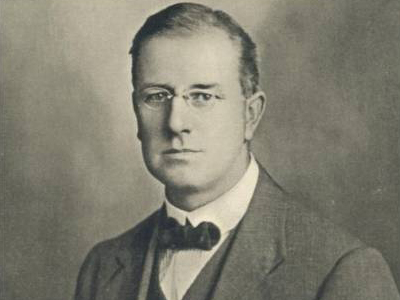
The Bertram Dillon Steele Lecture commemorates UQ’s founding Professor of Chemistry, Bertram Dillon Steele, one of the original four professors appointed to the University.
Professor Steele was also the first president of the University’s Professorial Board (now known as the Academic Board) and chaired the Royal Commission on Prickly Pear, once an environmental scourge in Queensland.
The lecture was founded in 1982 by the UQ Chemical Society within the then Department of Chemistry.
The lecture was not offered in 2020 and 2021 due to the COVID-19 pandemic. From 2022 it is offered every second year, alternating with the School's other chemistry public lecture, the T. G. H. Jones Memorial Lecture.
Read more about Professor Steele on our history page.