
Title: Why Life Became Three Domains: An Energy Story
Abstract: Life has always depended on energy. From its origin to the present day, cells have captured energy from the movement of electrons between chemicals and used it to build themselves. One likely birthplace of life is alkaline hydrothermal vents, where reactions between rocks and water continuously produce hydrogen, a molecule rich in usable electrons. But if early life was born in hydrogen-rich environments, how did it escape those conditions and spread across the planet?
A thermodynamic view of early evolution suggests that life found two major escape routes. One lineage learned to use light to power hydrogen metabolism, giving rise to bacteria and photosynthesis. Another became specialized for conserving energy from trace hydrogen, giving rise to archaea and methane production. Later, as electron-rich compounds became scarcer in the oceans, hydrogen-based partnerships between bacteria and archaea may have driven the cellular merger that gave rise to eukaryotes. In this view, the three domains of life reflect three chapters in a single story: life’s adaptation to Earth’s changing energy landscape.
Bio: Masaru K. Nobu is a microbiologist and evolutionary biologist interested in one of biology’s most fundamental questions: why is life the way it is? His research explores how microorganisms and the early Earth shaped each other, how metabolism evolved, and how hidden microbial lifestyles continue to challenge textbook views of biology. Combining evolutionary theory, thermodynamics, genomics, cultivation, and physiology, he studies organisms and processes that sit near the foundations of life, including hydrogen-based symbioses, methane-producing archaea, photosynthetic bacteria, and deeply branching microbial lineages.
About Skerman Lecture
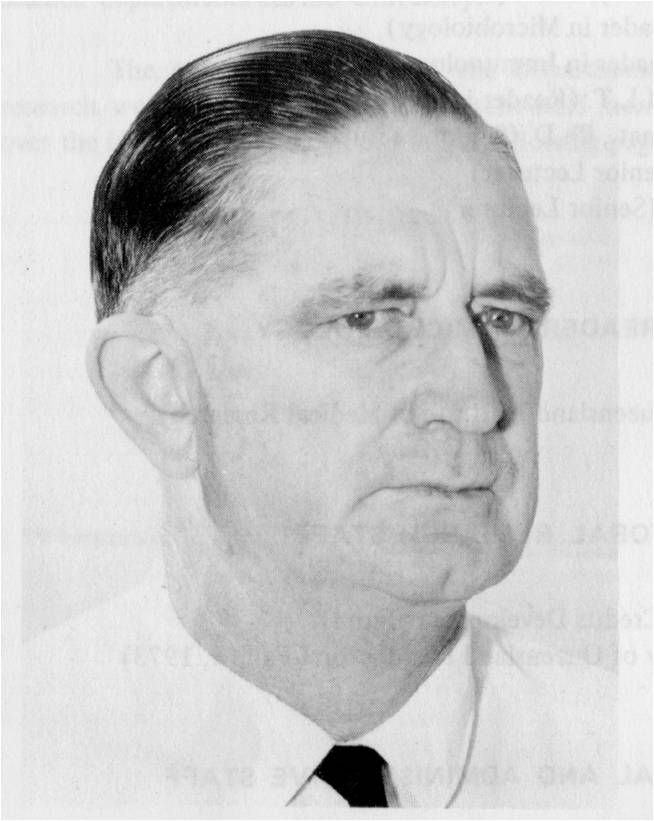
The Skerman Lecture recognises the contribution of Professor Victor Bruce Darlington Skerman in the development of Microbiology at The University of Queensland.
Professor Skerman was Head of the Department of Microbiology from 1962 to 1981, having been appointed Foundation Chair of Microbiology in 1961.
He had broad interests in microbial physiology, ecology and diversity, but is best known and recognised for his international reform of bacterial systematics and nomenclature.
The lecture was not offered in 2020 and 2021 due to the COVID-19 pandemic.
Read more about Professor Skerman on our history page.